



Preventive maintenance of industrial robots
Anticipate breakdowns, secure your line shutdowns and extend the service life of your robots.
Preventive maintenance of an industrial robot means checking the mechanical, electrical, software and safety condition of the equipment before a blocking breakdown occurs.
Robotique Concept works on site to help manufacturers make their KUKA, ABB, FANUC and Stäubli robots more reliable, prepare production shutdowns, identify signs of wear and plan the necessary actions before a fault disrupts production.
Schedule preventive maintenance
Send us the key information about your equipment and your needs. Our team will call you back to assess the situation and propose a suitable response.
Why schedule preventive robot maintenance?
An industrial robot working in production can show signs of wear long before a breakdown is visible: mechanical play, path drift, overheating, recurring faults, abnormal noise, ageing cables, outdated backups or critical components nearing end of life.
A preventive intervention checks these points before the machine stops. It usually takes place during a planned shutdown, a low-activity period, a line restart or a robot fleet audit.
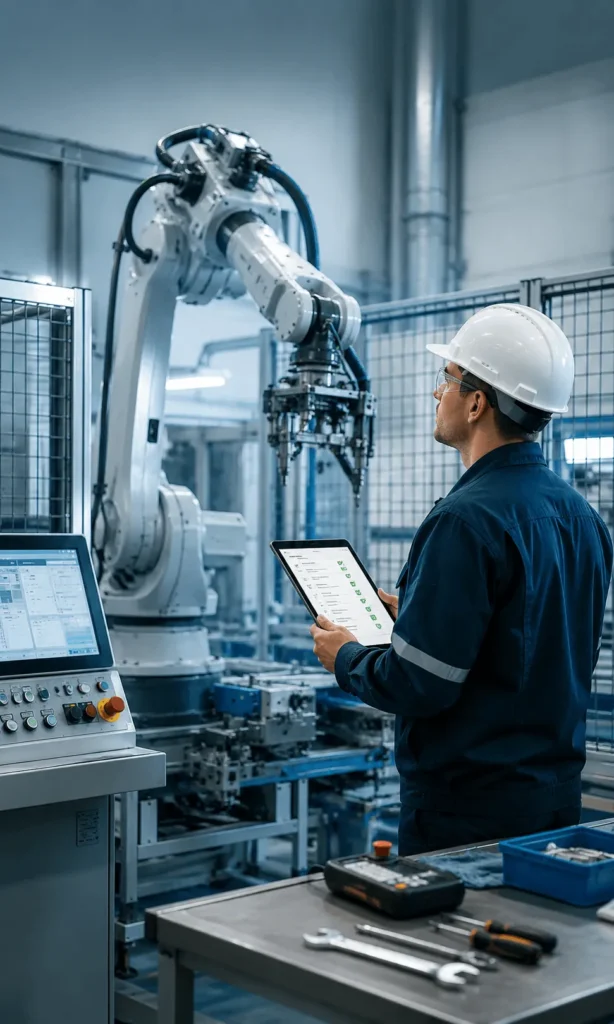
Reduce unplanned downtime
Identify signs of wear before a blocking breakdown.
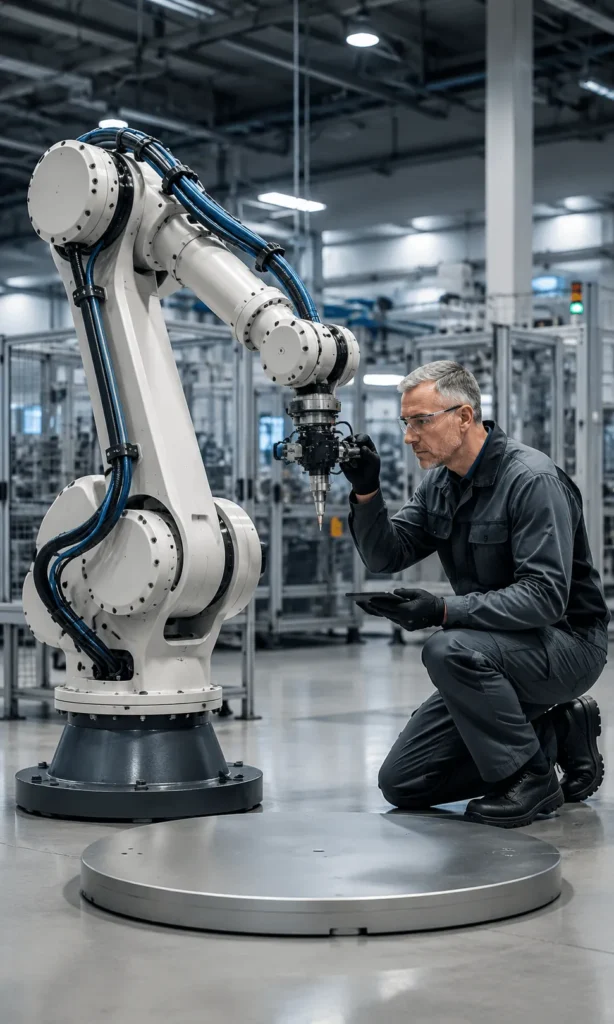
Secure line restarts
Check the robot’s condition before production resumes.
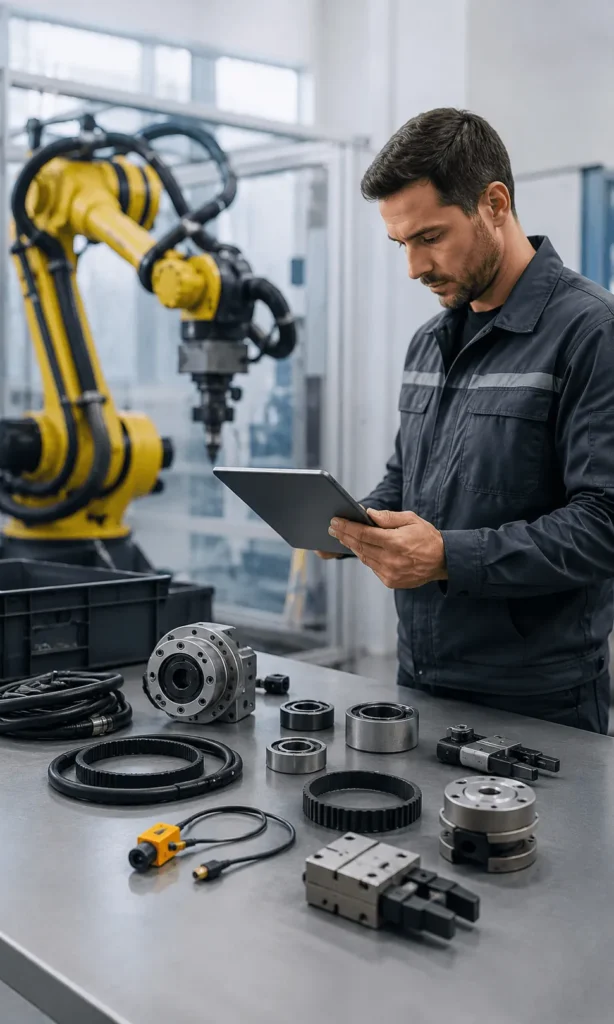
Plan replacements
Anticipate critical parts and limit emergencies.
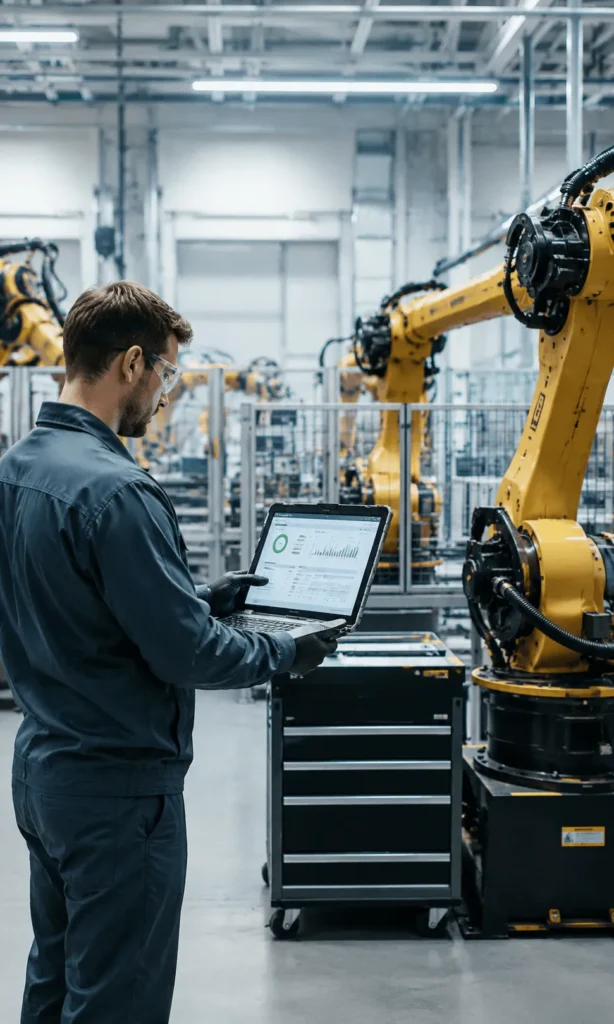
Track fleet condition
Get a technical report your maintenance teams can act on.
What we check during preventive maintenance
Each intervention follows a checklist adapted to the brand, model, controller and application of your robot. The checks cover four areas:
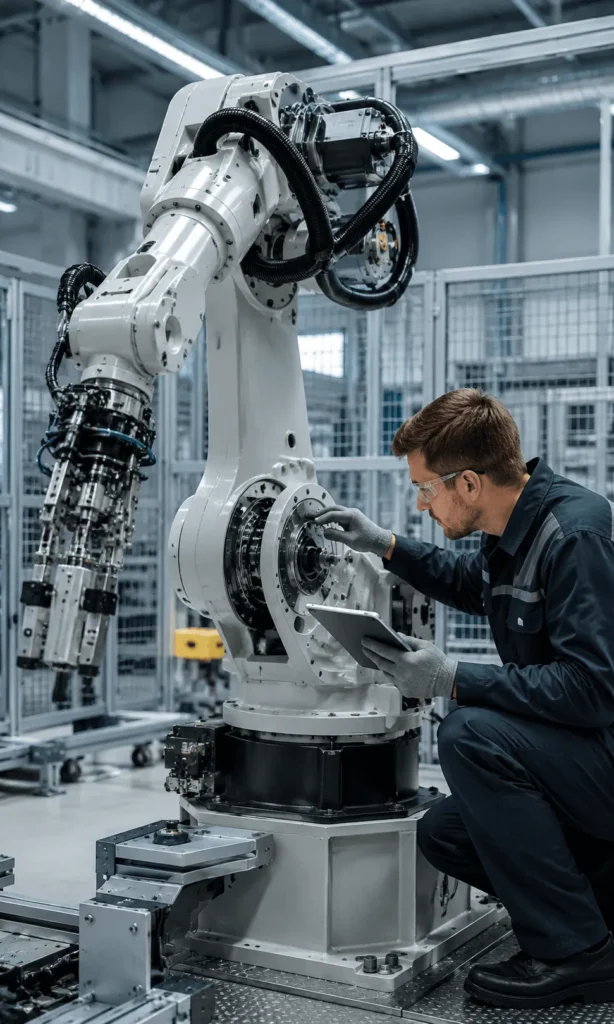
Robot mechanics
We check the overall condition of the robot arm: axes, gearboxes, joints, greasing, mechanical play, abnormal noise, on-arm cabling, wrist, fixings and wear parts.
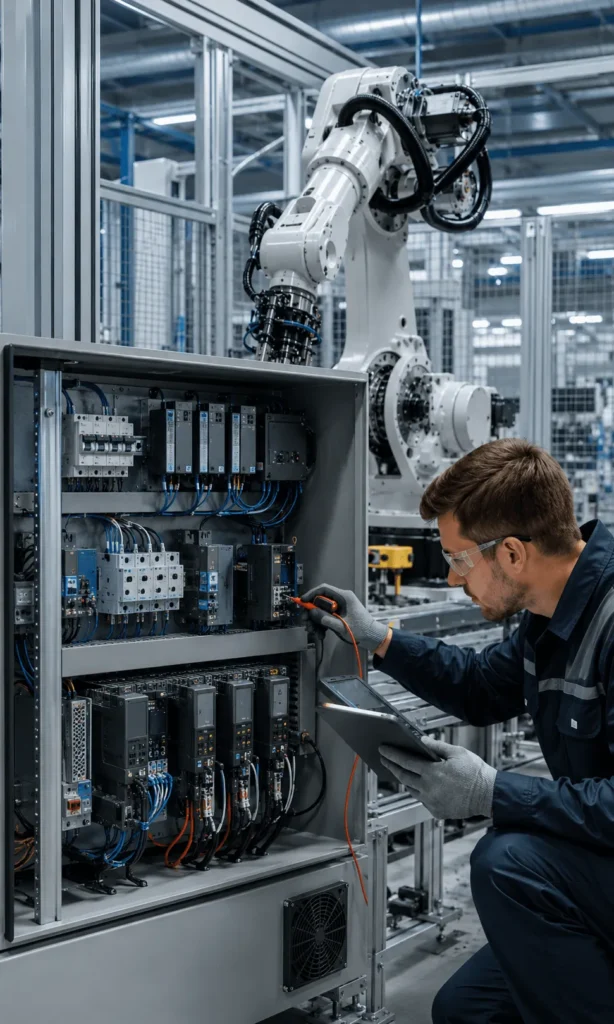
Controller and electrical components
We check the controller’s sensitive components: ventilation, connectors, electronic boards, drives, power supplies, batteries, teach pendant, connecting cables and stored faults.
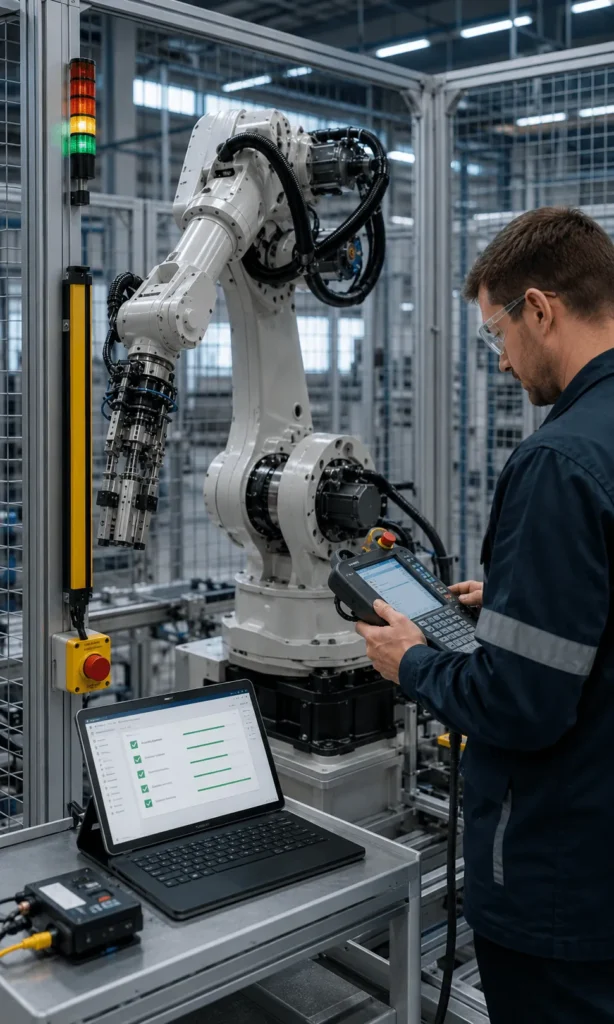
Backups, software and safety
Depending on the installation, the intervention can include checking backups, analysing the fault history, verifying critical parameters and initial checks of the cell’s safety devices.
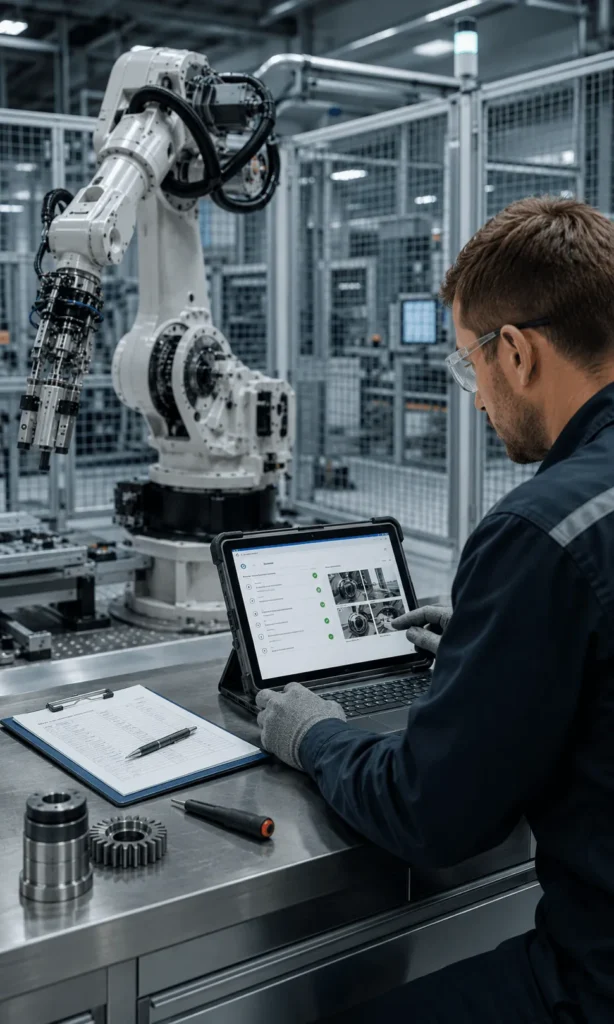
Service report
After the intervention, you receive technical feedback recording the checks performed, the anomalies found, the actions taken and our maintenance recommendations.
When should you schedule preventive maintenance?
Preventive maintenance is particularly recommended in the following situations:
- Before a planned production shutdown;
- Before restarting a line after a shutdown period;
- When a robot shows recurring non-blocking faults;
- After buying or recommissioning a used robot;
- Before a production ramp-up;
- When a robot fleet has not been audited for several months;
- Before a retrofit or a cell modification.
How does your service request work?
1. Needs assessment
You send us the brand, model, controller, production context, any faults and the possible shutdown window.
2. Intervention planning
We identify the priority checkpoints, the parts or consumables that may be needed and the site constraints.
3. On-site intervention
Our technicians carry out the mechanical, electrical and software checks and the planned maintenance operations.
4. Report and recommendations
You receive technical feedback with the findings, the actions taken and recommendations to make your equipment more reliable.
Prepare your next production shutdown with preventive maintenance.
Frequently asked questions about preventive maintenance
Frequency depends on the brand, model, environment, production rate and manufacturer recommendations. A heavily used robot exposed to dust, heat or spatter generally needs closer monitoring than a robot used occasionally.
Yes. It is actually the best time. Preventive maintenance can be organised during a line shutdown, an annual maintenance period, a low-activity period or before a production restart.
Robotique Concept mainly works on KUKA, ABB, FANUC and Stäubli industrial robots, depending on the models, parts availability and the type of intervention.
No. It does not completely eliminate the risk of breakdown, but it helps identify signs of wear, correct some faults before they get worse and better plan the necessary replacements.
Yes. The intervention can include a technical report listing the checks performed, the actions taken, the anomalies found and our maintenance recommendations.